Support WhatsApp: +44 785 643-7247
UK Driving Licence Categories Explained: A, B, C and More
Look at the back of your UK driving licence and you’ll see a block of letters and numbers that mean almost nothing at a glance B, BE, C1, D1, A2. Most drivers never look twice. Then one day someone asks whether their licence covers a hired minibus, a big motorhome, or a trailer full of horses, and suddenly those letters matter quite a lot.
This guide breaks down UK driving licence categories properly what each one actually lets you drive in everyday terms, not just the legal definition. We’ll cover motorcycles, cars, vans, lorries, buses, and the specialist categories most people have never heard of, along with the real weight limits and trailer rules behind them, checked against current DVLA and GOV.UK guidance rather than general assumption.
How to Read Your UK Driving Licence
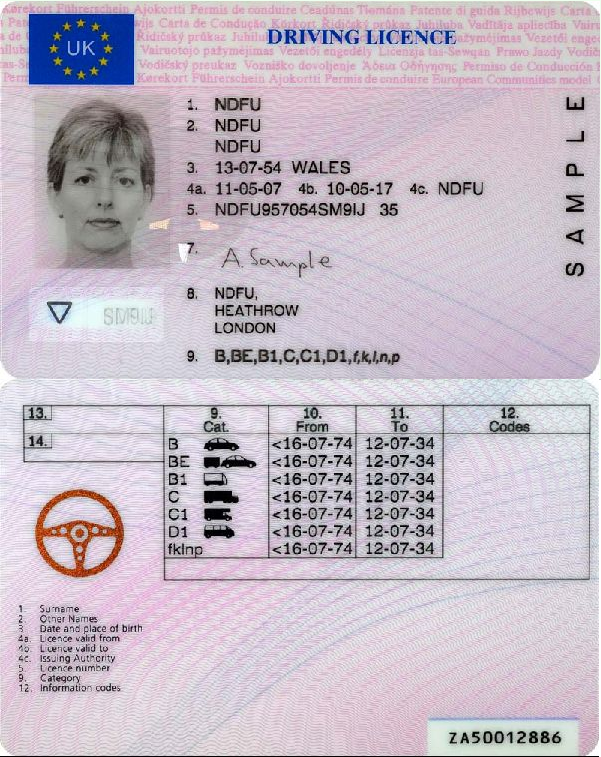
Where to Find Your Categories
Your entitlements are listed on the back of your photocard licence, or you can check them for free using the “View your driving licence information” service on GOV.UK, which also shows any restrictions, endorsements, and penalty points.
Understanding Entitlement Codes
Each category comes with a start date and, in some cases, an expiry date specific to that entitlement. A category showing no expiry date generally means it’s valid for as long as your main licence is.
Restrictions and Endorsements
Alongside vehicle categories, your licence can carry restriction codes (for example, requiring glasses, or restricting you to automatic vehicles only) and endorsement codes recording penalty points from driving offences. These are separate from but sit alongside your category entitlements. can employer see penalty points on my licence
Motorcycles & Mopeds
Motorcycle and Moped Categories
Category AM
Everyday example: a 50cc moped or scooter used for short urban trips.
- Vehicle type: mopeds and light quadricycles
- Engine limit: up to 50cc (or up to 4kW for electric)
- Maximum speed: 28mph (45km/h)
- Minimum age: 16
Category A1
Everyday example: a small, learner-friendly 125cc commuter bike.
- Vehicle type: light motorcycles
- Engine/power limit: up to 125cc and 11kW
- Minimum age: 17
Category A2
Everyday example: a mid-size motorcycle in the 300–500cc range, popular with newer adult riders.
- Power limit: up to 35kW (47bhp), with the bike’s power-to-weight ratio also restricted
- Minimum age: 19
Category A
Everyday example: any full-size, full-power motorcycle, including large sports bikes and tourers, with no power restriction.
- Power limit: none full, unrestricted access
- Minimum age: 24 for direct access with no prior motorcycle licence, or 21 if you’ve already held an A2 licence for at least two years (progressive access) UK vehicle licence classes
Motorcycle Category Comparison
| Category | Everyday Example | Engine/Power Limit | Minimum Age |
|---|---|---|---|
| AM | Moped or scooter | Up to 50cc, 28mph max | 16 |
| A1 | Small 125cc commuter bike | Up to 125cc, 11kW | 17 |
| A2 | Mid-size motorcycle | Up to 35kW (47bhp) | 19 |
| A | Any full-power motorcycle | No restriction | 21 (progressive) / 24 (direct) |
Cars & Light Vehicles
Car Licence Categories
Category B
Everyday example: this is your standard everyday car a hatchback, saloon, estate, or small van, and the licence category almost every UK driver holds.
- Vehicle type: cars and small vans
- Maximum Authorised Mass (MAM): up to 3,500kg
- Passenger limit: no more than 8 passenger seats, plus the driver
- Trailer rules: since a legislative change in December 2021, Category B licence holders automatically have B+E entitlement too, allowing towing up to a combined 3,500kg MAM, without a separate test
Category B Automatic
Functionally identical to Category B in terms of what you can drive, except your licence restricts you to automatic vehicles only. If you passed your test in an automatic car, you’ll need to pass a separate manual test (or simply retake in a manual vehicle) to remove this restriction. UK driving licence categories
Category B+E
Everyday example: towing a decent-sized caravan or a horsebox behind your family car.
- What it covers: cars combined with trailers where the combined weight exceeds the automatic B+E allowance
- Current rule (from 19 January 2013): towing a trailer over 3,500kg, up to a combined vehicle-and-trailer MAM of 7,000kg, requires a separate B+E practical test
- Note: as above, drivers who passed their car test from 1 January 1997 onwards now automatically hold basic B+E entitlement (up to 3,500kg combined, following the December 2021 change); a separate B+E test is only needed to go beyond that, UK driving licence categories, UK driving licence codes.
Category B vs B+E Comparison
| Category | Everyday Example | Trailer Coverage |
|---|---|---|
| B | Standard car, no trailer or small trailer | Automatically includes towing up to 3,500kg combined MAM |
| B+E | Car towing a large caravan or horsebox | Extends towing entitlement up to 7,000kg combined MAM (via separate test, for trailers passed on/after 19 Jan 2013) |
Medium & Large Goods Vehicles
Medium and Large Vehicle Categories
Category C1
Everyday example: a typical Luton box van, a larger delivery van, or a small removals truck the kind of vehicle many tradespeople and delivery drivers use. UK driving licence categories
- MAM: between 3,500kg and 7,500kg
- Trailer: up to 750kg
- Minimum age: 18 (21 in some circumstances without professional training)
Category C1+E
Everyday example: a C1-sized van towing a substantial trailer, such as a plant trailer or box trailer for a small business.
- What it covers: C1 vehicles combined with a trailer over 750kg
- Combined weight limit: typically up to 12,000kg once you reach 21 (18-year-olds with certain training routes have a lower limit around 7,500kg combined, increasing automatically at 21)
Category C
Everyday example: a full-size rigid lorry or HGV, the kind used for long-haul freight and larger commercial deliveries.
- MAM: over 3,500kg
- Trailer: up to 750kg
- Minimum age: 21 (18 via certain approved professional training routes)
Category C+E
Everyday example: an articulated lorry (“artic”) a large rigid truck towing a substantial trailer, the classic image of a motorway HGV.
- What it covers: Category C vehicles combined with a trailer over 750kg
- Minimum age: 21 (with training-route exceptions similar to Category C)
Passenger Carrying Vehicles
Bus and Minibus Categories
Category D1
Everyday example: a typical minibus, such as those used for school transport, community groups, or small tour operators.
- Passenger limit: between 9 and 16 passenger seats, plus the driver
- Trailer: up to 750kg
- Minimum age: 21 in most cases
Category D1+E
Everyday example: a minibus towing a luggage trailer for a longer group trip.
- What it covers: D1 vehicles combined with a trailer over 750kg
- Combined weight limit: up to 12,000kg
Category D
Everyday example: a full-size coach or public bus, carrying more than 16 passengers.
- Passenger limit: more than 16 passenger seats, plus the driver
- Trailer: up to 750kg
- Minimum age: 24 in most cases (lower with approved professional training routes, alongside Driver CPC requirements)
Category D+E
Everyday example: a full-size coach towing a substantial luggage or equipment trailer.
- What it covers: Category D vehicles combined with a trailer over 750kg
A note on Driver CPC: anyone driving buses, coaches, or lorries professionally (for hire or reward) generally also needs a Driver Certificate of Professional Competence, on top of the relevant licence category this is a separate professional qualification, not just a licence entitlement. share dvla check code with employer
Specialist Categories
Specialist Licence Categories
A handful of less common categories cover specific vehicle types:
- Category F — agricultural tractors. Covers tractors used in farming, with some age and width-based conditions depending on the specific vehicle and trailer combination.
- Category G — road rollers, a niche category for specific construction and roadworks vehicles.
- Category H — tracked vehicles, primarily relevant to specific tracked construction or military-style vehicles rather than everyday driving.
- Category K — mowing machines and pedestrian-controlled vehicles, relevant to certain agricultural and grounds maintenance equipment. UK driving licence codes
These specialist categories are genuinely uncommon for most drivers, and the exact conditions attached to each can depend on your licence issue date and the specific vehicle involved. If any of these apply to your work or circumstances, it’s worth checking your exact entitlement directly on GOV.UK, since the detail here is more vehicle-specific than the mainstream categories above.
What Is Maximum Authorised Mass (MAM)?
Definition
Maximum Authorised Mass, often written as MAM, is the maximum legal weight a vehicle is allowed to be when fully loaded — sometimes also called the gross vehicle weight. It’s not the weight of the empty vehicle; it’s the maximum it’s rated to weigh once passengers, fuel, and cargo are all accounted for.
Why It Matters
Your licence category is defined by MAM thresholds, not by how a vehicle looks or feels to drive. A large panel van can easily tip over the 3,500kg Category B threshold even though it looks similar to smaller vans that stay comfortably under it.
How to Find a Vehicle’s MAM
This is shown on the vehicle’s VIN plate (usually in the engine bay or door frame) and on the V5C registration document, listed as the permissible maximum weight.
Common Misunderstandings
A frequent and genuinely costly mistake: assuming a Category B licence covers any van “because it’s basically a car.” Larger vans, particularly long-wheelbase Luton-style vans and heavier motorhomes, can exceed 3,500kg MAM and require Category C1 instead driving one without the right entitlement is a real legal issue, not just a technicality.
Understanding Grandfather Rights: Passed Your Test Before 1 January 1997?
This is one of the most misunderstood parts of the whole system, and it catches out even drivers who’ve held a licence for decades.
If you passed your standard car (Category B) test before 1 January 1997, your licence automatically includes additional entitlements that newer drivers don’t get automatically:
- C1 and C1+E (medium goods vehicles up to 7,500kg, with trailers up to a combined 8,250kg MAM)
- D1 and D1+E (minibuses with 9–16 seats, though the D1 element is typically restricted to “not for hire or reward” use — meaning personal or voluntary use rather than paid passenger transport)
In practice, this means a driver who passed their test in, say, 1985 and has only ever driven ordinary cars since may still be legally entitled to drive a 7.5-tonne horsebox lorry or a minibus for a community group, without ever having taken a specific test for it. These are often called acquired rights, and they remain valid today unless the licence has since been restricted or the driver has voluntarily removed them.
If you’re unsure whether you hold these entitlements, the quickest way to check is the free “View your driving licence information” service on GOV.UK, which will show exactly what’s listed against your licence.
How Licence Categories Affect Insurance
Insurers price and validate cover partly based on what your licence actually entitles you to drive — driving a vehicle outside your licence category, even accidentally, can invalidate your insurance entirely, regardless of how safely you were driving at the time. This is particularly relevant for motorhome and horsebox owners, where the vehicle’s MAM can creep just over the Category B threshold without the owner realising.
Common Mistakes People Make
- Assuming Category B covers all vans. It only covers vehicles up to 3,500kg MAM plenty of larger vans and motorhomes exceed this.
- Confusing C1 and C. C1 covers 3,500kg–7,500kg; full Category C covers anything above 3,500kg with no upper limit, and requires separate testing at a higher minimum age. employer checking uk driving licence online
- Ignoring trailer limits. Towing capacity is governed by both your licence category and the specific combined weight rules — not simply “whatever your car can physically pull.”
- Misunderstanding automatic-only licences. Passing your test in an automatic restricts you to automatics only; passing in a manual covers both.
- Not checking entitlement codes. Particularly relevant for pre-1997 drivers, who often don’t realise they already hold valuable additional entitlements.
Frequently Asked Questions
What vehicles can I drive with a Category B licence? Category B covers cars and small vans up to 3,500kg Maximum Authorised Mass, with no more than 8 passenger seats. It also automatically includes basic trailer towing entitlement up to a combined 3,500kg MAM.
What is the difference between C1 and C? Category C1 covers goods vehicles between 3,500kg and 7,500kg MAM, typical of large delivery vans or small removal trucks. Category C covers anything over 3,500kg with no upper limit, covering full-size HGVs and requiring a higher minimum age. documents needed to change name on uk licence
What is Maximum Authorised Mass? Maximum Authorised Mass (MAM) is the maximum legal weight a vehicle is rated to be when fully loaded, including passengers and cargo. It’s shown on the vehicle’s VIN plate and V5C document, and it determines which licence category you need.
Can I tow a caravan with Category B? Yes, up to a combined vehicle-and-trailer weight of 3,500kg MAM automatically. Towing a heavier caravan, up to 7,000kg combined, requires passing a separate Category B+E test, unless you already hold pre-2013 B+E entitlement.
How many passengers can a D1 licence carry? Category D1 covers minibuses with between 9 and 16 passenger seats, in addition to the driver. Larger vehicles with more than 16 passenger seats fall under the full Category D licence instead.
Can I drive a 7.5-tonne lorry? Yes, if you hold Category C1, which covers goods vehicles between 3,500kg and 7,500kg MAM. Drivers who passed their car test before 1 January 1997 may already hold this entitlement automatically through grandfather rights.
What is Category AM? Category AM covers mopeds and light quadricycles up to 50cc with a maximum speed of 28mph. It’s available from age 16 and is often a young rider’s first step into motorcycling.
What licence do I need for a motorhome? This depends entirely on the motorhome’s Maximum Authorised Mass. Motorhomes up to 3,500kg MAM are covered by a standard Category B licence; heavier motorhomes require Category C1, regardless of how car-like the vehicle feels to drive.
How do I add another category to my licence? You’ll generally need to apply for provisional entitlement in the new category, then pass the relevant theory and/or practical tests for that category, which can be done through GOV.UK once you meet the age and medical requirements.
Where can I check my driving licence categories? The free “View your driving licence information” service on GOV.UK shows all your current entitlements, restrictions, and endorsements, using your driving licence number, National Insurance number, and postcode.
Conclusion
Understanding UK driving licence categories comes down to matching real vehicles to specific weight and passenger thresholds, not vague impressions of “car” versus “lorry.” Category B covers the vast majority of everyday driving, but the moment a van, motorhome, or trailer combination edges past 3,500kg MAM, or a minibus carries more than 8 passengers, the rules shift into different category territory entirely. If you passed your test before 1997, it’s genuinely worth checking your exact entitlements, since you may already hold more than you realise.